
Every couple knows the 2 a.m. standoff. One person has kicked the duvet onto the floor and is splayed like a starfish. The other is burrowed in up to the chin and wondering why the room feels like a meat locker. Nobody is wrong, exactly. You just run at different temperatures, and one mattress has to serve you both.
The good news is that smart health tech has finally caught up with this very ordinary problem. Here is why temperature matters so much for sleep, why the thermostat is the wrong tool for a two-person bed, and what to look for in a bed-level cooling setup.
Why Temperature Quietly Runs Your Night
Your body is built to cool down for sleep. As bedtime approaches, core temperature starts to drift lower, and that drop is part of the signal that tells your brain it is time to shut down. The Sleep Foundation explains that the body sheds heat by sending blood flow out to the hands and feet, and that a warmer core is linked with less restorative slow-wave sleep and poorer sleep quality overall.
That is why sleep specialists generally recommend a bedroom somewhere in the 60s Fahrenheit. The catch is that “ideal” is a range, not a number, and the right spot inside it differs from person to person. Which brings us to the real problem.
The Couple Problem
If you share a bed, the temperature disagreement is probably familiar, and you are in good company. In a survey of 902 Americans who live with a partner, The Sleep Judge found that 45% of couples disagreed about room temperature, and that sleep-environment arguments were more likely to send people to bed angry than some far more obvious flashpoints.
The usual fix is a compromise: set the thermostat to the midpoint, then add or remove blankets as needed. In practice that tends to leave one person a little too warm and the other a little too cool. A room thermostat is also a blunt instrument. It cools the air, not the surface you are actually lying on, and it can only do one temperature for two bodies.
Moving the Thermostat Into the Bed
This is where bed-level temperature control comes in, and it is one of the more genuinely useful categories in smart sleep tech. Instead of conditioning the whole room, these systems regulate the sleeping surface itself.
The Sleepme Chilipad cooling system for couples is a good example of the approach. It is a water-based mattress topper: a controller circulates temperature-controlled water through the pad beneath your sheets, with a range the company lists as roughly 55°F to 115°F. For couples, the important part is the dual-zone design. Each side of the bed gets its own setting, so the partner who runs hot can sleep cool while the one who runs cold stays warm, with no negotiation and no spare blanket.
A few practical details are worth noting for anyone comparing options:
- Start with one zone or two. Sleepme says you can begin with a single zone and add a second later, which helps if one of you is more skeptical than the other.
- Schedules do the work. Through the app you can set sleep schedules that change the temperature across the night, for example cooler at bedtime and gentler toward morning, so you are not fiddling with settings half asleep.
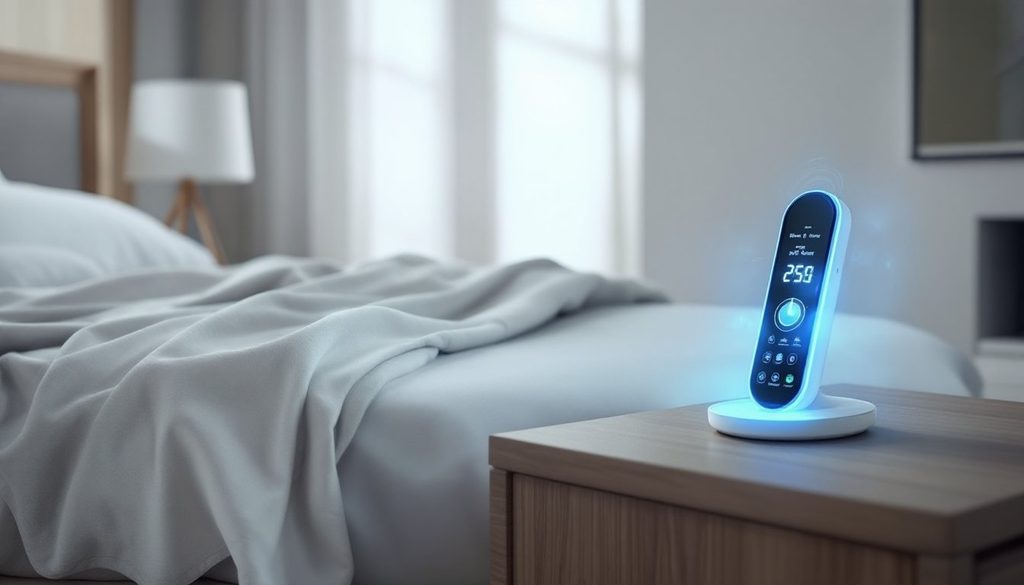
- A bedside dial. The system includes a nightstand remote, so you can adjust without reaching for your phone.
- In-bed detection. The remote and app work together to start your schedule when you get into bed.
- No subscription. Sleepme says there are no subscription fees with its system.
What to Look For in a Couples’ Cooling Setup
Whether you choose this system or another, a few criteria separate a good fit from an expensive disappointment:
- Truly independent zones. “Dual” should mean each side holds its own temperature, not a single setting applied to the whole bed.
- Noise. The unit sits next to your head all night. Check how quiet it is, and read user reviews specifically about sound.
- Mattress compatibility. Make sure it works with your bed type, including adjustable bases or split setups if that is what you have.
- Automation. The best systems handle the night for you, so you are not adjusting by hand at 3 a.m.
- Ownership costs and returns. Look at warranty terms, return windows and whether the controller needs ongoing fees.
Getting the Most Out of It
Technology helps, but a few habits make it work better. Keep the rest of your sleep routine consistent, since a regular bedtime and a dark, quiet room do plenty of the heavy lifting. Do not set both sides to the coldest possible setting on night one. Start moderate, then adjust over a week or two as you learn what each of you prefers. And talk about it. A surprising number of couples have never actually compared notes on what temperature feels best, and the conversation alone can be revealing.
One caution: if you are waking up drenched most nights, or the sweating is new and unexplained, mention it to your doctor. A cooling system can make a hot bed more comfortable, but it is not a substitute for finding out why you are overheating.
The Bottom Line
Sleeping next to someone you love should not require a nightly treaty negotiation over the thermostat. A bed-level, dual-zone system gives each person their own climate under one set of sheets, and for plenty of couples that is the difference between tolerating the same bed and enjoying it. If temperature is the thing quietly costing you sleep, it may be the most practical upgrade in your bedroom.